The Ancient History of Incense: From Sacred Temples to Modern Wellness
Imagine standing in an ancient Egyptian temple as fragrant smoke spirals toward the heavens, carrying prayers to the gods. This exact ritual—burning sacred resins to connect with the divine—began over 5,000 years ago. Yet if you’ve ever lit incense before yoga or meditation, you’re part of this unbroken tradition. The history of incense spans millennia, weaving through civilizations and cultures, yet its purpose remains remarkably unchanged: to elevate consciousness, purify space, and create sacred atmosphere. Here’s how humanity’s oldest aromatic practice journeyed from pharaohs to your wellness routine.
Where Did Incense Originate? Ancient Egypt & Mesopotamia
The story of incense begins in the cradle of civilization, where aromatic smoke first rose from temple altars over five thousand years ago.
Frankincense & Myrrh in Egyptian Ceremonies (3000 BCE)
Incense burning originated in ancient Egypt around 3000 BCE, where it held profound religious significance. Egyptian priests burned precious resins like frankincense and myrrh in elaborate ceremonies to honor their pantheon of gods. These weren’t simple rituals—they were sophisticated spiritual technologies. The Egyptians believed that aromatic smoke literally carried their prayers upward to the divine realm, creating a visible, tangible bridge between earth and heaven.
Frankincense was so valuable it was called “the sweat of the gods,” while myrrh held similar sacred status. Pharaohs were even buried with incense to ensure safe passage to the afterlife. The famous expedition of Queen Hatshepsut to the Land of Punt specifically sought these precious resins, demonstrating how central incense was to Egyptian spirituality and economy.
Babylonian Incense Offerings to the Gods
Meanwhile, in ancient Mesopotamia, the Babylonians developed their own sophisticated incense traditions. They crafted elaborate burners and recorded detailed recipes on clay tablets—some of the world’s earliest written formulas. Babylonian priests understood that different resins and herbs created different spiritual effects, laying groundwork for the aromatherapy practices we use today.
The Sacred Role of Incense in Eastern Religions
As incense traditions spread eastward, they became deeply woven into the spiritual fabric of Asian cultures, where they remain central to religious practice today.
Incense in Hindu & Buddhist Traditions
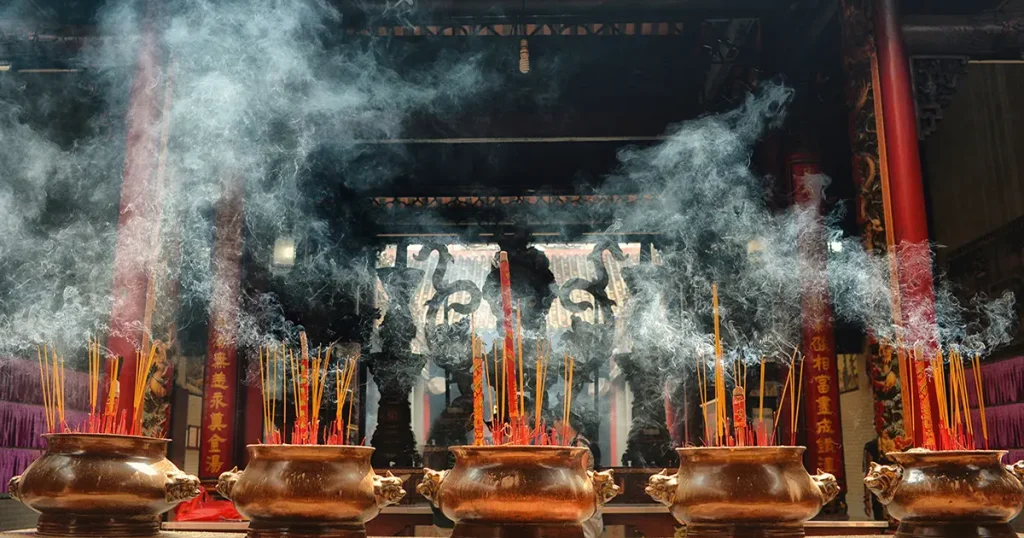
In India, incense became inseparable from Hindu worship and meditation. Temple ceremonies, personal pujas, and daily rituals all incorporated fragrant smoke as an offering to deities and a tool for focusing the mind. When Buddhism emerged around 500 BCE, it adopted and expanded incense use, spreading these practices throughout Asia along with Buddhist teachings.
Buddhist monks recognized that certain scents aided meditation, helping practitioners achieve deeper states of concentration. This wasn’t mere superstition—the mindful act of lighting incense became a meditation in itself, while specific aromas genuinely influenced mental states and breathing patterns.
Ayurvedic Healing Properties of Sacred Smoke
Ancient Ayurvedic medicine took incense beyond the spiritual realm into therapeutic applications. Ayurvedic practitioners understood that different botanicals carried specific healing properties. Sandalwood calmed the mind, neem purified the air, and various herb combinations balanced the doshas—the fundamental energies governing health and wellbeing.
These weren’t just pleasant scents; they were sophisticated herbal medicines delivered through smoke. Many Ayurvedic incense blends available today follow recipes thousands of years old, preserving this ancient healing wisdom.
How the Silk Road Spread Incense Across Civilizations
The expansion of trade routes transformed incense from regional practice into global phenomenon, making it one of history’s most valuable commodities.
Arabian Frankincense Trade Routes
The famous Silk Road wasn’t just about silk—frankincense and myrrh were equally prized. Arabian merchants controlled the frankincense trade, transporting the precious resin from Southern Arabia and Northeast Africa across vast desert routes. This trade was so lucrative that entire kingdoms rose and fell on the frankincense economy. The journey was treacherous, adding to incense’s mystique and value.
At its peak, frankincense was literally worth its weight in gold. Roman Emperor Nero famously burned an entire year’s supply of frankincense at his wife’s funeral—a display of wealth that would be worth millions today.
Japanese Kōdō: The Art of Incense Appreciation
When incense reached Japan via the Silk Road, Japanese culture elevated it to an art form. Kōdō, meaning “the way of incense,” emerged as one of Japan’s traditional arts alongside tea ceremony and flower arranging. Rather than simply burning incense, Kōdō practitioners “listen” to fragrance in meditative ceremonies, where participants identify rare aromatic woods in blind tests.
This refined appreciation transformed incense from religious tool to aesthetic experience, demonstrating how deeply fragrant smoke had embedded itself in human culture across the globe.
Traditional Incense Types Throughout History
Different cultures developed distinct incense forms, each suited to their spiritual practices and available materials.
Resin-Based Incense (Frankincense, Myrrh, Copal)
The earliest incenses were pure resins—hardened tree sap containing concentrated aromatic compounds. Frankincense, myrrh, and copal (used extensively in Mesoamerican ceremonies) were burned directly on charcoal, releasing thick, fragrant smoke. This method remains popular today for its purity and powerful aroma.
Stick & Cone Incense Development
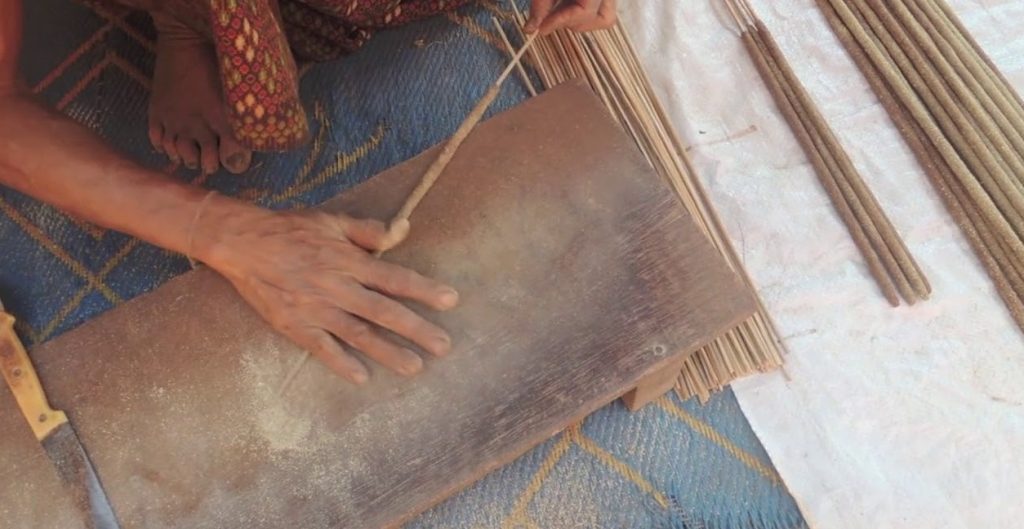
As incense production evolved, manufacturers developed more convenient forms. Stick incense, where aromatic powder coats a bamboo core, emerged in China and became the most recognizable form worldwide. Cone incense, developed later, offers concentrated fragrance in a compact, self-burning format. Both innovations made incense more accessible for daily personal use beyond temple ceremonies.
Herbal Smudge Bundles in Indigenous Cultures
Indigenous cultures of the Americas developed their own incense traditions, particularly smudge bundles made from white sage, cedar, and sweetgrass. These bundles weren’t merely aromatic—they were sacred tools for spiritual cleansing and ceremony. The practice of sage smudging has experienced renewed interest as people seek authentic, earth-based spiritual practices.
Each culture’s approach to incense reflected their unique spiritual understanding and available botanicals, yet all shared the core belief: sacred smoke transforms space and consciousness.
The Modern Revival: Incense in Contemporary Wellness
After declining in Western culture during the industrial era, incense has experienced a remarkable renaissance as part of the modern wellness movement.
Meditation & Yoga Studio Practices
Walk into virtually any yoga studio or meditation center today, and you’ll encounter the familiar aroma of sandalwood or nag champa. Modern practitioners have rediscovered what ancient yogis always knew: certain scents create conducive environments for inner work. The simple act of lighting incense signals to the mind that it’s time to shift from everyday consciousness into meditative awareness.
This isn’t just psychological conditioning—research has confirmed that specific aromas genuinely influence brainwave patterns, breathing rates, and stress hormone levels. Ancient wisdom meets modern science in the smoke rising from your meditation cushion.
Energy Cleansing & Space Clearing Rituals
Contemporary spiritual seekers have embraced incense for energy clearing and space purification, often combining it with other practices like crystal grids and intention setting. Whether you believe in subtle energies or simply appreciate the ritual of refreshing your home’s atmosphere, incense provides a tangible way to mark transitions and create sacred space in everyday life.
People use incense when moving into new homes, after difficult conversations, before important work, or simply to shift the energy of their day. These modern applications echo ancient practices—using aromatic smoke to transform both space and consciousness.
FAQs About the History of Incense
What is the oldest recorded use of incense?
The oldest recorded use of incense dates back to ancient Egypt around 3000 BCE, where priests burned frankincense and myrrh in religious ceremonies. Archaeological evidence, including tomb paintings and recovered incense burners, confirms that Egyptians used aromatic resins extensively in temple worship and funerary rites for pharaohs.
Why was incense so valuable in ancient times?
Incense was extraordinarily valuable due to its rarity and the difficulty of obtaining it. Frankincense and myrrh grew only in specific regions of Arabia and Africa, requiring dangerous desert trade routes to transport. Combined with its central role in religious ceremonies across multiple civilizations, incense became one of the ancient world’s most sought-after commodities—at times worth more than gold.
What cultures traditionally used incense?
Incense traditions span virtually every ancient civilization: Egyptian priests offered it to gods, Hindu devotees used it in temple worship, Buddhist monks burned it during meditation, Catholic and Orthodox Christians incorporated it in sacred rites, Islamic cultures used bakhoor in homes and mosques, Japanese practitioners developed Kōdō ceremony, and Indigenous American peoples smudged with sage and sweetgrass. This near-universal adoption reveals something fundamental about human spirituality and our relationship with aromatic smoke.
How did ancient people make incense?
Ancient incense makers harvested tree resins by making cuts in frankincense and myrrh trees, allowing the sap to harden into “tears.” They ground dried herbs, flowers, and woods into powder, often mixing them with natural binders and rolling them onto bamboo sticks. The Japanese developed sophisticated kneaded incense techniques, combining multiple rare aromatic woods with precise attention to aging and curing. These recipes were closely guarded secrets passed down through generations.
Is modern incense the same as ancient incense?
Some modern incense preserves ancient traditions quite faithfully—particularly Ayurvedic and Japanese varieties that follow centuries-old recipes. However, many commercial incense sticks use synthetic fragrances and binders rather than pure botanicals. When seeking authentic incense experiences, look for traditionally crafted options made with natural ingredients, similar to the resins and herbs used by ancient practitioners.
Connecting Ancient Wisdom to Modern Practice
From the temple priests of ancient Egypt to your meditation cushion today, the sacred smoke of incense has carried human prayers, intentions, and healing for over five millennia. This isn’t merely history preserved in museums—it’s a living tradition you participate in every time you light a stick.
The remarkable continuity of incense use across cultures and epochs reveals something profound about human nature. Whether seeking divine connection, mental clarity, or simply a moment of peace, people have always understood that aromatic smoke transforms both space and consciousness. The same frankincense that perfumed pharaohs’ temples can ground your morning meditation. The sandalwood cherished by ancient yogis still calms modern minds.
What makes incense so enduring is its simplicity. You need no special training, no complex equipment, no institutional authority—just intention, flame, and fragrant material. This accessibility has allowed the practice to survive regime changes, religious reforms, and technological revolutions.
Whether you choose traditional Ayurvedic blends crafted from ancient recipes, pure frankincense resin, or chakra-balancing incense for modern energy work, you’re joining an unbroken chain of spiritual seekers across time. Each wisp of smoke connects you to countless humans who stood before altars, meditation cushions, and prayer spaces, seeking the same transformation you seek today.
The sacred smoke continues to rise. The ancient practice endures. And you are part of this timeless tradition.
Ready to begin your own incense ritual? Explore our carefully curated collection of authentic Ayurvedic and traditional incense, and discover which ancestral aroma resonates with your modern practice. Shop our incense collection today.