
Quartz Pendulum Dowsing: A Complete Guide to Divine Answers & Inner Clarity
Imagine holding a simple crystal suspended on a chain, asking a question, and watching as it begins to move—guided not by your hand, but by an intelligence beyond your conscious mind. This is pendulum dowsing, an ancient divination practice that has survived millennia precisely because it works. For centuries, mystics, healers, and seekers have used quartz pendulums as tools for spiritual guidance, energy healing, and accessing the profound wisdom of their higher selves.
What makes pendulum dowsing so remarkable is its elegant simplicity. Unlike complex divination systems requiring years of study, a pendulum offers immediate, direct communication between your conscious awareness and your intuitive knowing. Whether you’re seeking yes-or-no answers to life decisions, checking the balance of your chakras, locating energy blockages, or simply wanting to develop your intuitive abilities, a quartz pendulum can become your most trusted spiritual ally.
In this comprehensive guide, you’ll discover everything you need to begin your own dowsing practice—from understanding how pendulums work to mastering advanced techniques for energy healing and spiritual insight. Whether you’re a curious beginner or an experienced practitioner looking to deepen your skills, this guide will help you unlock the profound potential of quartz pendulum dowsing.
What Is Pendulum Dowsing?
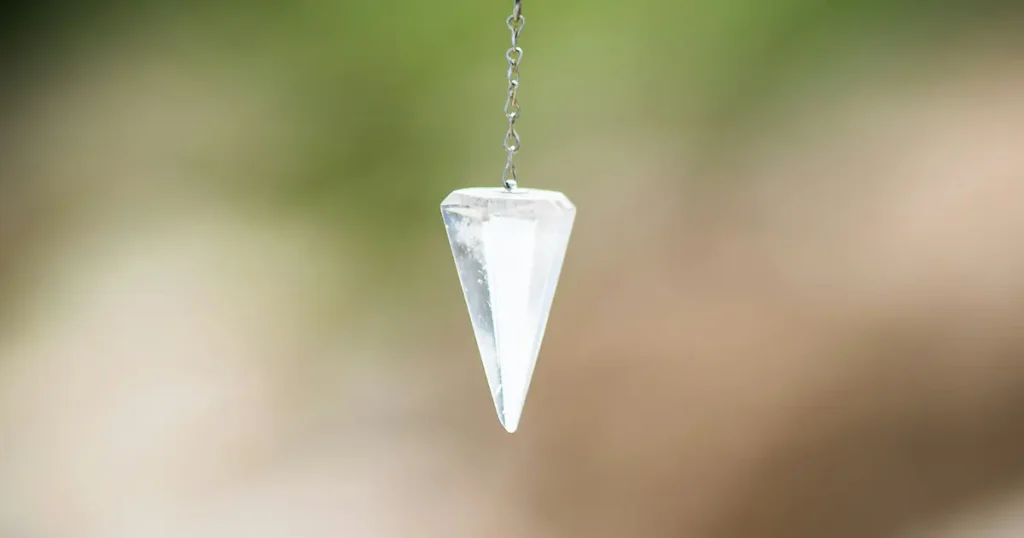
Pendulum dowsing is the ancient art of using a weighted object—typically a crystal or metal point suspended on a chain or string—to answer questions, detect energy, and access intuitive information. When held still and asked a question, the pendulum responds through distinct movement patterns: swinging back and forth, side to side, or rotating in circles to communicate “yes,” “no,” “maybe,” or more complex answers.
The practice has roots stretching back thousands of years. Ancient Egyptians used pendulum-like devices in their temples, Chinese emperors employed dowsing to make important decisions, and European villages relied on dowsers to locate underground water sources. While the methods have evolved, the core principle remains unchanged: a pendulum acts as an amplifier for the subtle energies and intuitive knowledge that exist just below our conscious awareness.
Modern practitioners understand dowsing as a method of accessing the subconscious mind, higher self, or universal consciousness—depending on your spiritual framework. The pendulum itself isn’t magical; rather, it’s an incredibly sensitive instrument that responds to the micro-muscular movements produced by your nervous system when your intuition knows something your conscious mind doesn’t yet recognize.
Why Choose Quartz for Pendulum Dowsing?
While pendulums can be made from various materials—metal, wood, stone—clear quartz stands as the gold standard for several compelling reasons:
Highly Programmable: Quartz crystal has a unique molecular structure that allows it to receive, store, and transmit energy. This programmability means you can set clear intentions for your pendulum’s purpose and it will hold that program reliably.
Natural Amplification: Quartz amplifies energy—both the subtle intuitive signals you’re receiving and the questions you’re sending out. This amplification effect makes responses clearer and easier to perceive, especially for beginners still developing their sensitivity.
Energetically Neutral: Unlike crystals with strong specific properties (like grounding hematite or emotionally-charged rose quartz), clear quartz maintains neutral balance. It won’t influence your readings with its own energetic signature, ensuring pure, unfiltered answers.
Universal Compatibility: Clear quartz works harmoniously with any energy frequency or spiritual tradition. It’s equally effective whether you’re working with chakras, doing Celtic-inspired dowsing, or developing your psychic abilities.
This combination of qualities makes quartz the ideal pendulum material for both beginners learning the basics and advanced practitioners doing sophisticated energy work. It’s essentially a spiritual antenna—receiving, transmitting, and amplifying the subtle information flowing between your higher self and your conscious mind.
What Can You Use a Pendulum For?
The applications for pendulum dowsing are remarkably diverse, limited only by your creativity and willingness to develop the skill. Here are the most common and powerful uses:
Receiving Intuitive Guidance
The most fundamental use is obtaining clear yes-or-no answers to life questions. Unlike the mind’s tendency to overthink and second-guess, your pendulum connects to intuitive knowing that sees the bigger picture. Use it for decisions about:
- Career choices and job opportunities
- Relationship questions and compatibility
- Health and wellness decisions (complementing, not replacing, medical advice)
- Timing questions: “Is now the right time to…?”
- Spiritual path inquiries and practice guidance
Energy Healing & Chakra Work
Pendulums excel at detecting and diagnosing energy imbalances. Hold your pendulum over each chakra point to assess whether energy is flowing smoothly or if blockages exist. The pendulum’s movement reveals energy quality instantly—something that might take years to develop feeling through your hands alone.
Selecting Remedies & Tools
When choosing between healing crystals, essential oils, herbs, or supplements, your pendulum can indicate which option resonates best with your current energy. Simply hold it over each option and ask “Is this the right choice for me now?” This energetic testing ensures you select tools that truly serve your highest good rather than what simply looks appealing.
Locating Lost Objects
Traditional dowsing excels at finding things. Use your pendulum over a map or floor plan, asking “Is my lost item in this area?” as you systematically narrow down the location. Many people have recovered lost jewelry, keys, and even pets using this method.
Earth Energy & Space Clearing
Dowse your home to locate geopathic stress zones, ley lines, or areas of negative energy. This information helps you arrange furniture, choose bedroom locations, or know where to place protective crystals and perform sage cleansing.
Decision Making & Path Finding
When facing multiple options, use your pendulum to evaluate each path. Rather than making choices from fear or external pressure, you’re consulting your soul’s wisdom about what truly aligns with your highest purpose.
The key to all these applications is understanding that your pendulum isn’t an external authority making decisions for you—it’s a tool for accessing the deep wisdom you already possess but may struggle to hear through the noise of daily life.
What You’ll Need to Begin Your Dowsing Practice
One of pendulum dowsing’s great advantages is its simplicity. You need very little to start:
A Quartz Pendulum: Choose one with a pointed or rounded tip suspended on a chain approximately 6-8 inches long. The weight should feel comfortable—not too heavy or too light. Trust your intuition when selecting; you’ll know when you find “your” pendulum.
A Quiet Space: Especially when learning, minimize distractions. Find a peaceful spot where you can focus without interruption. As you gain skill, you’ll be able to dowse anywhere, but beginners need calm environments to hear subtle responses.
A Pendulum Chart (Optional): For answers beyond yes/no, printed charts allow you to receive more complex information—days of the week, numbers, letters, percentages, or custom options you create.
An Open Mindset: Approach dowsing with curiosity rather than desperate need. The more neutral and relaxed you are, the clearer your readings become. Anxiety, attachment to specific outcomes, or skepticism can all interfere with accuracy.
A Journal: Record your questions, answers, and outcomes. Over time, you’ll see patterns in accuracy, learn which types of questions work best, and build trust in your abilities.
Step-by-Step: How to Use Your Quartz Pendulum
Follow this systematic process to develop reliable dowsing skills. Don’t skip steps—each builds upon the previous one.
Step 1: Cleanse Your Pendulum
Before using any new crystal tool, clear accumulated energy from its journey to you. Your pendulum has been handled by others and absorbed various energies during mining, manufacturing, and shipping. Start fresh by cleansing thoroughly:
Smoke Cleansing: Pass your pendulum through the smoke of white sage, palo santo, or sacred incense. The smoke carries away stagnant energy while blessing your tool with clear intention.
Water Cleansing: Hold under cool running water for one minute while visualizing all previous energy washing away. (Only for quartz—some crystals dissolve in water.)
Selenite Charging: Place your pendulum on a selenite plate or next to a selenite tower overnight. Selenite constantly cleanses and charges other crystals through proximity.
Moonlight Bath: Leave your pendulum in moonlight, especially during the full moon, to reset its energy to natural frequencies.
Sound Cleansing: Ring a singing bowl or bell near your pendulum. Sound waves break up stuck energy and restore neutral frequency.
After cleansing, hold your pendulum and state your intention: “This pendulum is a clear channel for truth, guidance, and my highest wisdom.” This programs it for its purpose.
Step 2: Ground & Center Yourself
You are the conduit through which intuitive information flows to move the pendulum. If you’re scattered, anxious, or mentally chaotic, readings become unreliable. Ground and center before every session:
- Sit comfortably with your feet flat on the floor
- Take three slow, deep breaths, releasing tension with each exhale
- Visualize roots growing from your tailbone deep into the earth, anchoring you
- Bring your awareness to your heart center, feeling calm and present
- State a grounding affirmation: “I am calm, clear, and connected to my highest wisdom” or “I release all attachment to outcomes and remain open to truth”
This process takes only 1-2 minutes but dramatically improves accuracy. Never skip grounding, especially when asking important questions where you’re emotionally invested in specific answers.
Step 3: Program Your Pendulum’s Response Language
This is the most crucial step that many beginners skip, leading to confusion and inaccurate readings. Every person-pendulum combination develops unique movement patterns. What means “yes” for your friend might mean “no” for you. Always establish your pendulum’s language before asking real questions.
Finding Your “Yes” Response:
- Hold the chain between your thumb and forefinger, letting the pendulum hang freely
- Rest your elbow on a table for stability (initially—later you can dowse freehand)
- Keep your hand and arm still, relaxed but not rigid
- Say clearly: “Show me YES” or “Show me what YES looks like”
- Wait patiently. The pendulum will begin to move—perhaps swinging forward/backward, side to side, or in a clockwise circle
- Observe and memorize this movement. This is your unique “yes”
Finding Your “No” Response:
- Allow the pendulum to return to stillness
- Say clearly: “Show me NO”
- Note how it moves differently—usually perpendicular to your “yes” direction or in the opposite circular direction
Finding Your “Maybe/Unclear” Response:
- Some pendulums show “maybe” through erratic wobbles, diagonal movement, or simply not moving
- Ask: “Show me MAYBE or UNCLEAR”
- This response means you need to rephrase your question, the timing isn’t right, or free will makes the outcome undetermined
Practice this programming daily for the first week. Your pendulum’s language may shift slightly as you develop your relationship, so periodically re-check your yes/no responses to ensure consistency.
Step 4: Build Confidence with Known-Answer Questions
Before asking unknown questions, test your accuracy with facts you already know. This trains your nervous system to recognize the difference between accurate intuitive signals and wishful thinking or fear.
Practice Questions:
- “Is my name [correct name]?” (Should get “yes”)
- “Is my name [wrong name]?” (Should get “no”)
- “Am I sitting down right now?”
- “Is today [correct day of week]?”
- “Do I have [object you can see] in front of me?”
Do 10-20 known-answer questions per session for your first several sessions. This builds neural pathways, confidence, and trust in your pendulum’s reliability. When you consistently get accurate answers to known questions, you’re ready for unknown territory.
Step 5: Ask Clear, Specific Questions
Question phrasing dramatically impacts answer quality. Follow these guidelines:
Use Yes/No Format: “Should I accept this job offer?” not “What should I do about this job offer?”
Be Specific: “Is moving to Portland in my highest good?” not “Should I move somewhere?”
One Question at a Time: Don’t compound questions. “Should I accept this job AND move to the new city?” is actually two questions.
Present or Near-Future Focus: “Is this relationship healthy for me now?” works better than “Will I marry this person?” because free will means distant futures remain fluid.
Avoid Negative Phrasing: Ask “Is this supplement beneficial?” rather than “Is this supplement NOT harmful?” Double negatives confuse interpretation.
Good Practice Questions:
- “Is this crystal energetically aligned for my needs today?”
- “Is my heart chakra currently balanced?”
- “Should I attend this event tomorrow?”
- “Is this person trustworthy in business matters?”
- “Have I resolved the emotional issue I’ve been working on?”
Step 6: Interpret Movement Patterns
While your specific responses were established in Step 3, here are common traditional patterns:
Forward/Backward Swing: Typically means “yes” for most people. The pendulum swings away from and toward your body along a line.
Side-to-Side Swing: Usually indicates “no.” The pendulum moves left to right across your body.
Clockwise Circle: Often means “yes” or positive energy flow. Can also indicate an open, balanced chakra.
Counterclockwise Circle: Frequently signals “no” or energy being released/cleared. Can indicate a blocked chakra needing attention.
Erratic/Elliptical Movement: Suggests “maybe,” “unclear,” or “rephrase the question.” Also can mean the answer is beyond yes/no or that you’re too emotionally attached to the outcome.
No Movement: Either you need better grounding, the question can’t be answered now, or you’re not meant to know this information yet.
Remember: Your pendulum’s language is unique to you. Always trust what you established during programming over general interpretations.
Step 7: Use Pendulum Charts for Complex Answers
When yes/no isn’t sufficient, printed charts expand your pendulum’s communication capabilities. Charts typically feature a semicircle or full circle divided into segments for different answers.
Types of Charts:
- Percentage Chart: 0-100% for measuring chakra openness, progress toward goals, or strength of energy
- Days of the Week: “Which day should I schedule this meeting?”
- Alphabet Chart: For spelling out names or words (advanced)
- Custom Charts: Create your own with specific options for your question
How to Use: Hold your pendulum over the chart’s center point, ask your question, and watch which segment it swings toward or hovers over. The pendulum will consistently point to the answer.
Using Pendulum Dowsing for Chakra Healing
One of the most practical applications of pendulum dowsing is assessing and balancing your chakra system. This technique offers immediate feedback on your energetic health.
Chakra Assessment Process:
- Prepare: Lie down or sit comfortably. If working on yourself, hold the pendulum over each chakra point on your body. If working on another person, have them lie down and hold your pendulum over their chakras, maintaining a few inches of distance.
- Starting Point: Begin at the root chakra (base of spine) and work upward, or start at the crown (top of head) and move downward. Consistency helps you develop your system.
- Observe Movement:
- Smooth, balanced circular motion: Chakra is open, healthy, and energy flows freely
- Large, fast circles: Chakra may be overactive or compensating for blockages elsewhere
- Small, tight circles: Chakra is beginning to close or has restricted energy flow
- Erratic wobbling: Significant blockage or imbalance needing attention
- Back-and-forth or side-to-side: Chakra is closed or severely blocked
- No movement: Deep blockage or the chakra has shut down completely
- Verification: For unclear readings, ask directly: “Is my [chakra name] balanced?” and note the yes/no response.
- Healing Response: When you find imbalances, address them through:
- Crystal healing with chakra-specific stones
- Sound healing with singing bowls or mantras
- Energy work like Reiki or pranic healing
- Meditation and visualization focused on that chakra
- Affirmations addressing the chakra’s themes
- Recheck: After performing healing work, dowse again to verify improvement. This feedback loop teaches you which techniques work best for your energy system.
Regular chakra checking (weekly or monthly) helps you catch imbalances before they manifest as physical or emotional issues. It’s preventive energetic maintenance.
Spiritual Tips for Accurate Dowsing
Mastering pendulum dowsing requires more than technique—it demands the right mindset and energetic approach.
Maintain Calm Detachment: The more desperately you need a specific answer, the less accurate your reading becomes. Your emotional charge influences the pendulum. Practice neutrality.
Avoid Loaded Questions: Don’t ask questions when you’re in crisis mode or highly emotional. Wait until you’ve calmed down. Emergency energy creates emergency readings—often inaccurate.
One Question at a Time: Don’t rapid-fire questions. Allow the pendulum to return to stillness between questions. Give your intuitive channel time to reset.
Regular Cleansing: Clear your pendulum’s energy between sessions, especially after emotional or heavy questions. Use smoke, selenite, or intention to reset it.
Don’t Obsess: Asking the same question repeatedly because you didn’t like the first answer compromises accuracy. Trust the initial response. If you genuinely need clarification, wait 24 hours and rephrase the question differently.
Understand Your Source: You’re not contacting external entities or spirits (unless that’s your specific intention). Primarily, you’re accessing your own subconscious wisdom, higher self, and the energetic information field around you. This is your intuition speaking—trust it.
Build Relationship: Your pendulum becomes more accurate the more you work with it. Like any skill, dowsing improves with practice. Be patient with yourself during the learning curve.
Know Your Limits: Some days your energy is off, you’re too tired, or your mind is too busy. On these days, dowsing accuracy drops. Recognize when to postpone sessions.
Ethical Considerations & Responsible Dowsing
With great power comes great responsibility. Follow these ethical guidelines to ensure your dowsing practice remains beneficial:
Never Replace Professional Help: Pendulums complement but never substitute for medical, legal, or financial professional advice. Use dowsing for guidance and insight, but make important decisions with appropriate expert consultation.
Respect Free Will: Don’t dowse about others without permission. Using your pendulum to make decisions for someone else or manipulate their choices violates spiritual ethics. You can ask “Is it in my highest good to pursue this relationship with [person]?” but not “Should [person] date me?”
Accept “No” Answers: When your pendulum says no to something you want, trust it. The universe often protects us from what we think we want because something better awaits. Respect the guidance.
Maintain Boundaries: Don’t let others pressure you to dowse about their lives constantly. Your energy has limits. It’s appropriate to decline requests that feel inappropriate or draining.
Stay Grounded: While dowsing is powerful, don’t become dependent on it for every minor decision. Maintain your own decision-making capacity and intuitive development. The pendulum is a training tool, not a crutch.
Emergency Situations: In true emergencies (medical crises, imminent danger), act immediately and appropriately. Don’t pause to consult your pendulum. It’s for contemplative guidance, not crisis management.
Caring for Your Quartz Pendulum
Your pendulum is more than a tool—it’s a spiritual ally that absorbs your energy and develops a relationship with you over time. Treat it with respect and care:
Proper Storage: Keep your pendulum in a dedicated pouch, box, or on your altar when not in use. Don’t toss it in a drawer with random items. Protect it from physical damage and energetic contamination.
Regular Cleansing: Clear your pendulum’s energy at least weekly, or more often if you’re using it frequently. After particularly heavy emotional questions or chakra healing sessions, cleanse immediately.
Charging Practice: Periodically recharge your pendulum in sunlight (brief—too much can fade some crystals) or moonlight to restore its natural vibration. You can also place it in a crystal grid for amplified charging.
Personal Use Only: Avoid letting others handle or use your pendulum. It attunes to your specific energy, and other people’s vibrations can interfere with this calibration. If someone else does touch it, cleanse thoroughly before your next use.
Respectful Intention: Treat your pendulum as a sacred object. Don’t use it frivolously or allow it to become entertainment at parties. The more respect you show, the more reliable it becomes.
Physical Care: Keep the chain untangled and check periodically that it’s securely attached to the crystal. A broken chain or detached crystal needs immediate repair to prevent loss of your trusted tool.
FAQs About Quartz Pendulum Dowsing
What if my pendulum doesn’t move at all?
Several factors can cause a non-responsive pendulum. First, check your grounding—are you calm and centered? Try the grounding meditation again. Second, ensure you’re holding the chain correctly with relaxed muscles, not gripping tightly. Third, cleanse your pendulum; accumulated energy can block responsiveness. Fourth, rephrase your question more clearly. Fifth, you might be too attached to getting a specific answer, which creates energetic resistance. Finally, some questions simply aren’t meant to be answered at this time. If nothing works, try again tomorrow with fresh energy.
Can I use crystals other than quartz for my pendulum?
Absolutely! While clear quartz is ideal for beginners due to its neutral amplifying properties, many other crystals work beautifully. Rose quartz creates a loving, gentle energy perfect for relationship questions and heart chakra work. Amethyst enhances spiritual connection and intuition, making it excellent for higher-guidance questions. Black obsidian or black tourmaline offers grounded, protective energy for shadow work or protection-related questions. Citrine brings clarity and abundance energy. Choose a crystal that resonates with your primary dowsing purposes. However, start with clear quartz to learn the basics before exploring specialty stones.
Am I just moving the pendulum myself with my hand?
This is the most common beginner concern, and it’s actually a sophisticated question about how dowsing works. Yes, technically your hand is moving—but not consciously. Your nervous system produces micro-muscular responses called ideomotor movements when your subconscious/intuition knows something. These tiny, involuntary muscle contractions move the pendulum. You’re not deliberately swinging it; your body is responding to intuitive information. With practice, you’ll clearly sense the difference between conscious movement and authentic dowsing response. The pendulum often moves in unexpected directions or ways you wouldn’t consciously choose, confirming it’s not deliberate manipulation. Trust develops through experience and verification of accurate answers.
How accurate is pendulum dowsing, really?
Accuracy varies significantly based on your skill level, state of mind, and the type of question asked. Beginners typically achieve 60-70% accuracy on straightforward questions. Experienced practitioners often reach 80-90% on topics where they have no emotional investment. However, accuracy drops dramatically when you’re emotionally attached to outcomes, tired, stressed, or asking about complex future events involving others’ free will. Questions about present-moment energy states (chakra balance, current compatibility, energy of spaces) tend to be most accurate because they’re measurable in the now. Predictive questions about distant futures are least accurate because free will constantly reshapes outcomes. The key is developing discernment about which questions yield reliable answers and building your skill through practice.
Can I dowse for other people, or only for myself?
You can dowse for others, but with important caveats. First, always get permission. Dowsing about someone without their knowledge violates energetic boundaries. Second, you can check someone’s chakras or energy state while they’re present and consenting. Third, avoid making decisions for others or asking questions that infringe on their free will. “Should Sarah break up with her boyfriend?” is inappropriate. “Is my energy compatible with Sarah’s for this business partnership?” respects both people’s autonomy. When dowsing for family members or clients in healing contexts, maintain clear boundaries and remember you’re providing information, not directives. Your accuracy may also be lower when dowsing for others because you’re reading energy at a distance from your own system.
Is pendulum dowsing connected to any specific religion or spiritual path?
Pendulum dowsing is a universal tool that transcends any single spiritual tradition. It has been used by ancient Egyptians, Chinese Taoists, European Christians, modern pagans, and secular intuitives. You don’t need to follow any particular belief system to dowse successfully. Some practitioners view it as accessing the higher self or soul wisdom, others see it as connecting with spirit guides or angels, while secular users consider it a method of reading subconscious knowledge and subtle energy fields. All these interpretations work because the mechanism—ideomotor response revealing intuitive information—remains consistent regardless of the spiritual framework you apply. Choose whatever interpretation resonates with your worldview; the pendulum works either way.
How long does it take to become proficient at pendulum dowsing?
Most people can get basic yes/no responses within their first session, but true proficiency takes consistent practice. Expect 2-4 weeks of daily practice (even just 10 minutes) to develop reliable accuracy on straightforward questions. After 3-6 months of regular use, you’ll have strong confidence and can tackle more complex questions. Advanced skills like chakra healing, map dowsing, or using detailed charts may take 6-12 months to master. However, everyone develops at their own pace. Some naturally intuitive individuals achieve accuracy quickly, while analytical thinkers might need more time to trust the process. The key is consistent practice, keeping a journal to track accuracy, and being patient with yourself during the learning curve. Your relationship with your pendulum deepens over years of working together.
Final Thoughts: Trusting Your Inner Compass
A quartz pendulum is far more than a pretty crystal on a chain—it’s a profound tool for accessing the wisdom that already exists within you. In our modern world of constant external noise, conflicting advice, and information overload, the pendulum offers something increasingly rare: a direct line to your own truth.
What makes pendulum dowsing so transformative is its ability to bypass the overthinking mind and connect you with deeper knowing. That gut feeling you’ve learned to second-guess? The intuitive whisper you’ve been trained to ignore? The inner wisdom you’ve been told doesn’t exist? Your pendulum gives all of this a voice—a visible, undeniable movement that says “Yes, you do know. Trust yourself.”
Like any spiritual practice, pendulum dowsing requires patience, dedication, and a willingness to develop new sensitivities. You won’t master it overnight. There will be sessions where the pendulum seems unresponsive, readings that prove inaccurate, and moments of doubt about whether this whole thing is “real.” That’s all part of the journey. Every expert dowser started exactly where you are now—uncertain, testing, learning to trust.
But here’s what happens when you commit to the practice: You begin recognizing patterns. Your accuracy increases. You start making decisions from centered knowing rather than fearful reactivity. You catch energy imbalances before they become physical symptoms. You choose opportunities aligned with your authentic path rather than what others expect. You develop unshakeable trust in your inner guidance system.
The pendulum is ultimately a training tool for your intuition. As you work with it, you’re actually strengthening your ability to sense energy, read situations, and access wisdom without the pendulum present. Many advanced practitioners eventually discover they don’t always need the physical tool—they’ve developed such strong intuitive muscles that they simply know. But even then, the pendulum remains a cherished ally for confirmation and deeper work.
Remember: You’re not asking an external authority to make your decisions. You’re not summoning spirits to tell you what to do. You’re connecting with the most powerful source of guidance available—your own higher self, which sees the bigger picture of your soul’s journey. The pendulum is simply the translator, making visible what your intuition already knows.
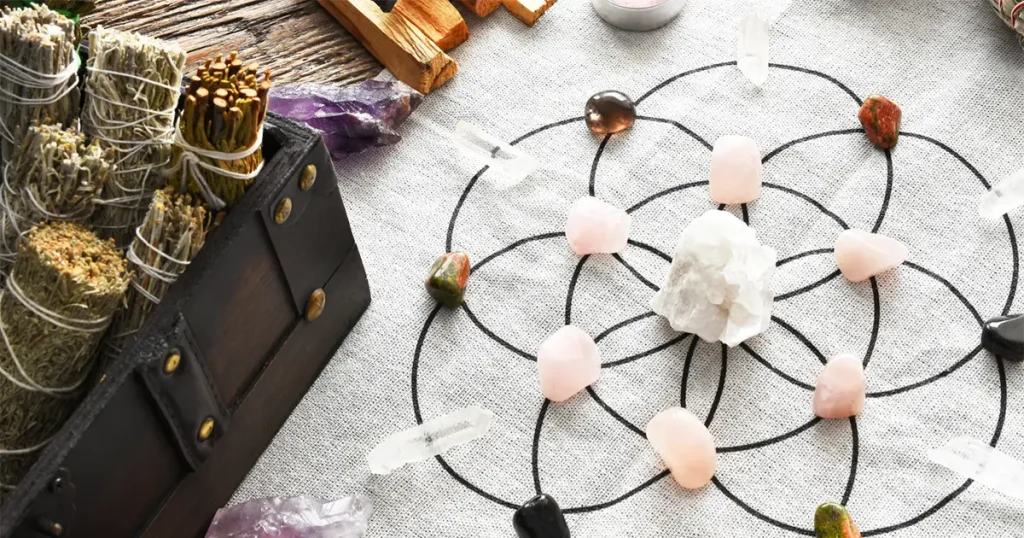
Combine your pendulum practice with other spiritual tools for even more powerful results. Use it alongside crystal grids to verify which stones your manifestation work needs. Dowse before smudging ceremonies to determine which areas of your home need the most clearing. Check chakra balance before meditation to know which energy centers need focus. Verify whether certain incense blends support your current spiritual work.
Whether you’re seeking daily clarity, spiritual insight, energetic alignment, or simply a tangible connection to your intuition, your quartz pendulum can become one of your most trusted spiritual allies. With an open heart, consistent practice, and respect for the wisdom flowing through you, pendulum dowsing becomes more than a technique—it becomes a sacred conversation with your soul.
The answers you seek already exist within you. Your pendulum simply helps you hear them.
Ready to begin your dowsing journey? Explore our collection of clear quartz and specialty crystal pendulums, cleansing sage bundles for keeping your tools energetically clear, and complete chakra balancing kits for energy healing work. Trust your intuition. It kn